Health & Safety Policy for Flat Clearance Pinner
Purpose: This policy outlines the health, safety and environmental standards applied by our flat clearance and rubbish removal operation within the defined service area. It sets out management responsibilities, workforce expectations and practical controls that reduce risk during clearances, collections and waste handling. The aim is to protect employees, contractors, clients and the public while delivering efficient clearance services.
Scope and application
Our policy applies to all activities related to flat clearance, waste collection and disposal tasks performed by the team. It covers preparation, on-site operations, transport and disposal, and storage of materials prior to removal. The policy is relevant to full clearances, partial clear-outs, bulky item removals and routine rubbish collections conducted within the company service area.Policy commitments
We are committed to maintaining a safe workplace by: reducing hazards, providing appropriate training and equipment, and ensuring compliance with applicable health and safety standards. Leadership will allocate resources to identify and control risks, continually improve practices and ensure the workforce understands and follows safe systems of work.
Risk assessment and control
Before any clearance work begins a formal risk assessment is carried out. The assessment considers manual handling hazards, slips and trips, sharp objects, hazardous materials (including asbestos suspicion), sharps, biological contaminants and vehicle movement. Controls are implemented by a hierarchy of measures:
- Elimination: Avoid unnecessary handling of items where possible.
- Substitution and separation: Segregate hazardous materials and use alternative, safer methods.
- Engineering controls: Provide mechanical aids, secure walkways and safe storage.
- Administrative controls: Use written safe systems of work, supervision and scheduling to reduce exposure.
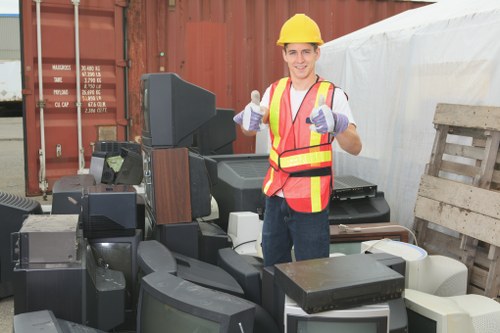
- PPE: Issue and enforce use of gloves, eye protection, protective footwear and high-visibility clothing where required.
Safe working procedures
Safe methods are established for typical tasks. These include pre-site checks, clearing walkways, using proper lifting techniques, and ensuring sharp or hazardous items are contained and labelled. Where hazardous materials are suspected, work stops and qualified advice is sought. The team follows clear procedures for working in communal areas and respects building rules and access constraints within the service area.Supervisors ensure everyone on site has been briefed and that toolbox talks or pre-shift briefings are carried out to highlight specific hazards. Vehicle loading is controlled to maintain stability and limit manual handling — trolleys and lifting aids are used for heavy or bulky items. Equipment is inspected before use and any defects are reported and taken out of service.
Training and competence
All staff receive induction training and regular updates covering manual handling, PPE use, hazardous materials awareness and safe driving for operative vehicles. Competence is assessed and documented; additional specialist training is provided when staff undertake heavier duties or specialist clearances. Contractors and temporary workers are briefed on this policy and must meet required competency checks before engagement.Reporting incidents, near misses and defects is mandatory. An accessible reporting system ensures that incidents are recorded promptly, investigated and corrective actions implemented. Lessons learned are shared with the team to prevent recurrence. First aid kits and trained first-aiders are available; emergency procedures are communicated and rehearsed where needed.

Waste handling, segregation and disposal
Waste is segregated at source to maximize recycling and to ensure safe disposal. Items are separated into recyclable materials, general waste, hazardous wastes and reusable items. Where the condition or content of waste creates a health concern, the material is managed under enhanced controls and specialist disposal routes are used. Documentation and waste transfer notes are maintained to show lawful management, without disclosing client details.
Health considerations and wellbeing
The physical and mental wellbeing of staff is an operational priority. Rotating tasks reduces repetitive strain, and adequate rest breaks are scheduled. Employees are encouraged to report health concerns and to seek occupational health support where appropriate. The company fosters an environment where safety concerns can be raised without fear of reprisal.Monitoring and review mechanisms are in place to ensure the policy remains effective. Regular audits, site inspections and performance metrics assess compliance and highlight improvement areas. The policy is reviewed at least annually or following significant incidents, changes in legislation, or operational changes within the rubbish removal and clearance service area.
Roles and responsibilities are clearly defined: management ensures resources and systems are provided; supervisors maintain safe daily operations; employees follow procedures and take reasonable care for their own safety and that of others. Collective responsibility ensures the safety culture is embedded across all clearance activities.
Implementation of this policy supports a professional, responsible and safe approach to flat clearance and waste removal operations. The company will communicate this policy to staff and make it available for reference to ensure consistent application across the service area. Regular training, monitoring and a commitment to continuous improvement underpin our approach to safety for everyone involved in clearance projects.