Flat Clearance Pinner: Recycling and Sustainability Commitment
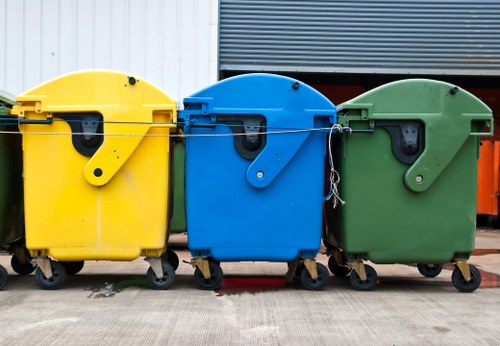 Flat Clearance Pinner places sustainability at the heart of every job. Our approach to eco-friendly waste disposal area management and a responsible, sustainable rubbish area mindset ensures that clearances are handled with minimal environmental impact. Whether you need a full Pinner flat clearance or selective flat removals in Pinner, our team follows strict reuse, recycle and reduce principles to divert as much material as possible from landfill.
We work within local recycling patterns and borough guidance — following the common London model of separate streams for dry recycling, food waste, garden waste and bulky items. By aligning our processes with municipal schemes we support consistent sorting, which improves recovery rates. Our crew is trained to separate materials on-site and pre-sort items for donation or specialised recycling where possible.
 Our sustainability plan includes a recycling percentage target for all flat clearance in Pinner operations: we aim to recycle or reuse at least 75% of collected material by weight across routine jobs. This target covers metals, wood, textiles, appliances, paper and cardboard, glass and plastics where facilities exist. It is an ambitious but achievable metric that guides our decisions during every clearance.
To reach this target we use a network of local transfer stations and recycling centres across Harrow and neighbouring London boroughs. These facilities allow us to separate residual waste streams efficiently and deliver materials to the correct processing lines. We schedule deliveries to municipal transfer stations and private material recovery facilities so recovered items follow the fastest route to recycling and reuse.
We also operate a coordinated reuse pipeline: items that are in good condition are identified during the clearance and diverted to partner organisations. Partnerships with charities and community reuse groups are central to our sustainable rubbish area ambitions. We collaborate with local furniture charities, community projects and textile recyclers to make sure usable items benefit people in the area rather than being discarded.
 Examples of reuse and charity partnerships include donating sofas, small furniture, mattresses and functional electricals to vetted charities and social enterprises. For items that cannot be rehomed, we prioritise material-specific recycling routes: MRFs for mixed recyclables, specialist processors for WEEE (electricals), and registered processors for hazardous or restricted materials. This layered approach keeps clearances aligned with the boroughs' approach to waste separation and maximises recovery.
Our sustainable practices extend to transport and logistics. We are gradually introducing low-carbon vans across our Pinner flat clearance services — including hybrid and electric light vans where suitable. Vehicle choice is complemented by route optimisation software and load planning to reduce unnecessary mileage and emissions. The result is a lower-carbon supply chain for waste collection and delivery to transfer stations.
On-site behaviour also matters: crews use reusable protective equipment, battery-powered tools where practical, and carry clearly labelled containers for recyclable fractions to limit contamination. We document and audit each clearance, reporting tonnages recycled, donated or disposed of with the aim of continuous improvement.
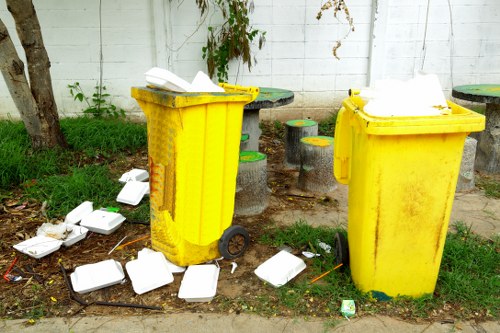 In addition to municipal facilities we work with accredited third-party processors that accept complex streams such as plasterboard, treated wood and construction waste from larger flat removals in Pinner. These processors ensure compliant handling and recovery, and they issue waste transfer documentation to verify correct processing — part of our transparent chain of custody for waste materials.
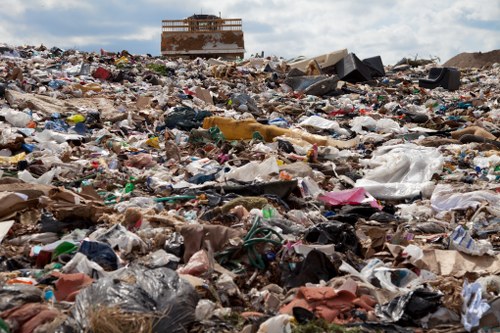 Community engagement is a cornerstone of our sustainable rubbish area work. We host periodic collection drives in coordination with local volunteers and charity partners to gather textiles and small household items that might otherwise be mixed into general waste. We encourage residents to use council recycling centres for segregated loads, but when that’s impractical we provide a responsible, eco-friendly alternative for clearances.
Practical recycling activities we support
- Textile collection for reuse or material recycling
- Separate collection and processing of WEEE and appliances
- Wood and furniture salvage for refurbishment or chipping
- Paper, cardboard and glass directed to local MRFs
- Safe handling and disposal of hazardous small items